Amidst the lagoon, the beaches and kitesurfing, Dakhla is home to an unusual attraction that few visitors expect: an ostrich farm. Situated around 8 to 10 km north of the town, in the Taourta region, it serves three purposes at once: a working farm, an educational centre and a small tourist attraction. It’s a great option for families, or for anyone looking for an alternative to the usual water sports.
What you’ll discover
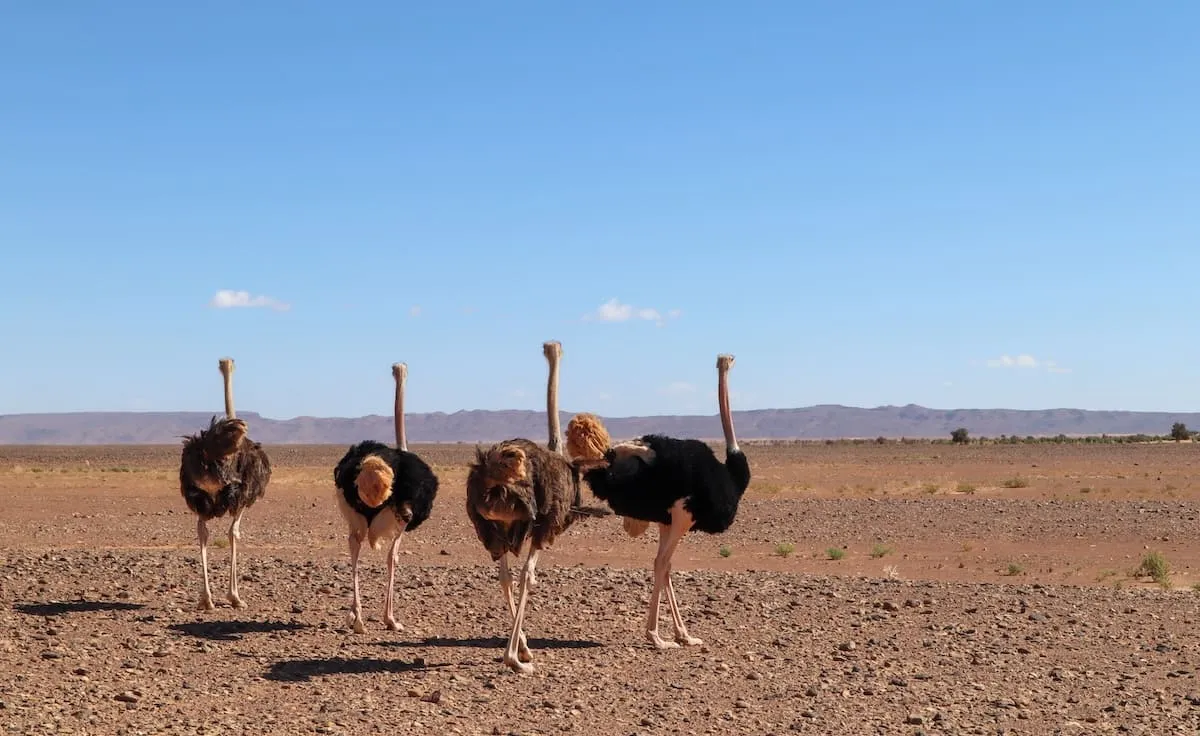
Ostriches in semi-freedom: The birds are separated by age. The adults live in large open enclosures, whilst the younger ones are kept in more sheltered areas, sometimes described as greenhouse-style enclosures that protect them from the wind and temperature fluctuations.
Truly imposing animals: Ostriches stand around 2 to 3 metres tall. They are the largest living birds on the planet and, as most people know but few have seen up close, they cannot fly. Standing just a few metres away from an ostrich is the main highlight of the visit.
A closer look at the farm: Depending on the season, you’ll be able to watch the birds feeding, breeding, brooding or looking after their newly hatched chicks. The staff will be able to explain the differences between males, females and juveniles, which are easy to spot once you’ve been shown what to look for.
A climate that suits them: Dakhla’s dry, temperate desert climate is considered particularly well-suited to this species, which partly explains the farm’s long-term success.
How big is the ostrich farm?
The published figures vary considerably. Some sources mention around 200 birds, whilst others cite between 460 and 500. This discrepancy is not necessarily a contradiction: the flock size fluctuates depending on births, sales and the time of year when the count was carried out. It is more accurate to expect an active flock numbering in the hundreds rather than a fixed figure.
The farm is said to have been established in 2005 and is not run solely to welcome visitors. The ostriches are reared commercially for their meat, feathers and skin. Tourist activity developed subsequently, largely because this type of farm remains rare in the southern provinces of Morocco.
What to expect when you visit?
Set your expectations accordingly: this is a farm, not a purpose-built zoo. There are no well-maintained tourist facilities, no long walkways and no elaborate signage. The appeal lies in observing the birds up close in an open-air desert setting, taking a few photos and discovering an unusual type of livestock farming.
Most visits are short. 30 minutes to an hour is usually enough. This makes it easy to fit into a half-day road trip by car, with a driver or a guide. Local tour operators sometimes offer combined packages with Dragon Island or other excursions around the lagoon, which is the most convenient option.

Is it really worth it?
Yes, if you enjoy wildlife photography or unusual local experiences, and especially if you’re travelling with children. It’s a real curiosity and a welcome change of pace.
That said, it’s no substitute for Dakhla’s main attractions. The lagoon, the White Dune and a trip to Dragon Island remain unmissable. Think of the ostrich farm as a pleasant addition to a longer itinerary rather than a destination in its own right.